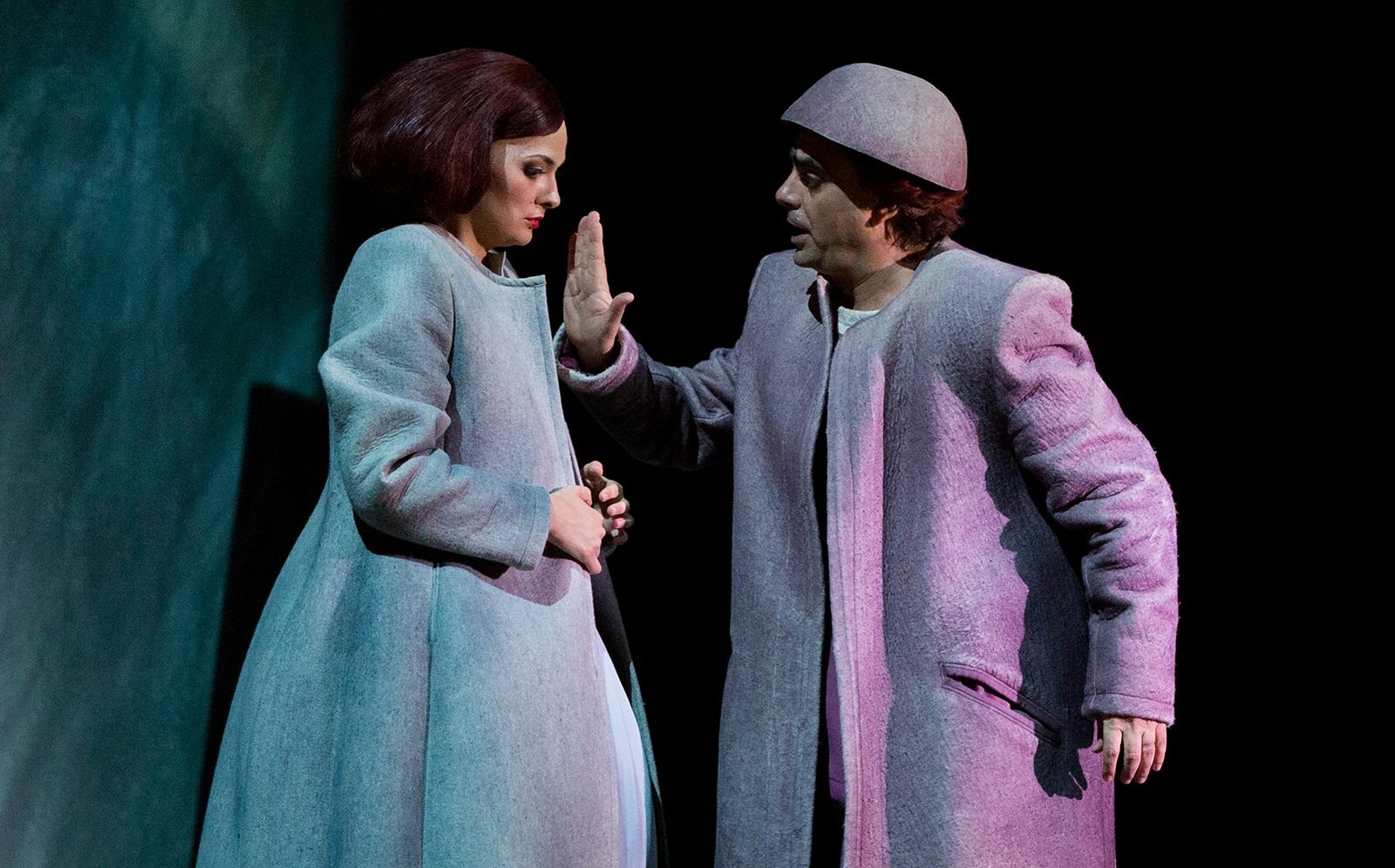
With the world premiere of Pelléas et Mélisande in 1902, Claude Debussy challenged his contemporaries to listen to music in a new way. His instrumentation was without precedent. He transposed the Wagnerian leitmotif technique into a subtle tone painting and described atmospheres and dispositions of the soul that elude description and that even music is often only able to gesture towards.
The opera is based on a drama of the same name by the Flemish symbolist Maurice Maeterlinck that tells the tragic, fairytale-like story of a love triangle between the stepbrothers Golaud and Pelléas and the mysterious Mélisande. The plot is sketched in vague terms, with the main emphasis on exploring the depths of the characters’ psyches. The tragedy takes the form not of open conflict but of subliminal mental processes. Debussy’s music remains equally restrained, often approaching silence. Myriad colours shimmer beneath the monochrome surface, however, and Debussy manages to perfectly translate the enigmatic, morbid atmosphere into music.
Musical Director Maxime Pascal
Director Ruth Berghaus
Set design, costumes Hartmut Meyer
Staatsopernchor, Staatskapelle Berlin
Arkel Wolfgang Schöne
Pelléas Rolando Villazón
Golaud Luca Pisaroni
Mélisande Marianne Crebassa
Geneviève Katharina Kammerloher
Doctor Shepherd David Oštrek
Yniold Solist des Tölzer Knabenchors
Picture © Tatjana Dachsel