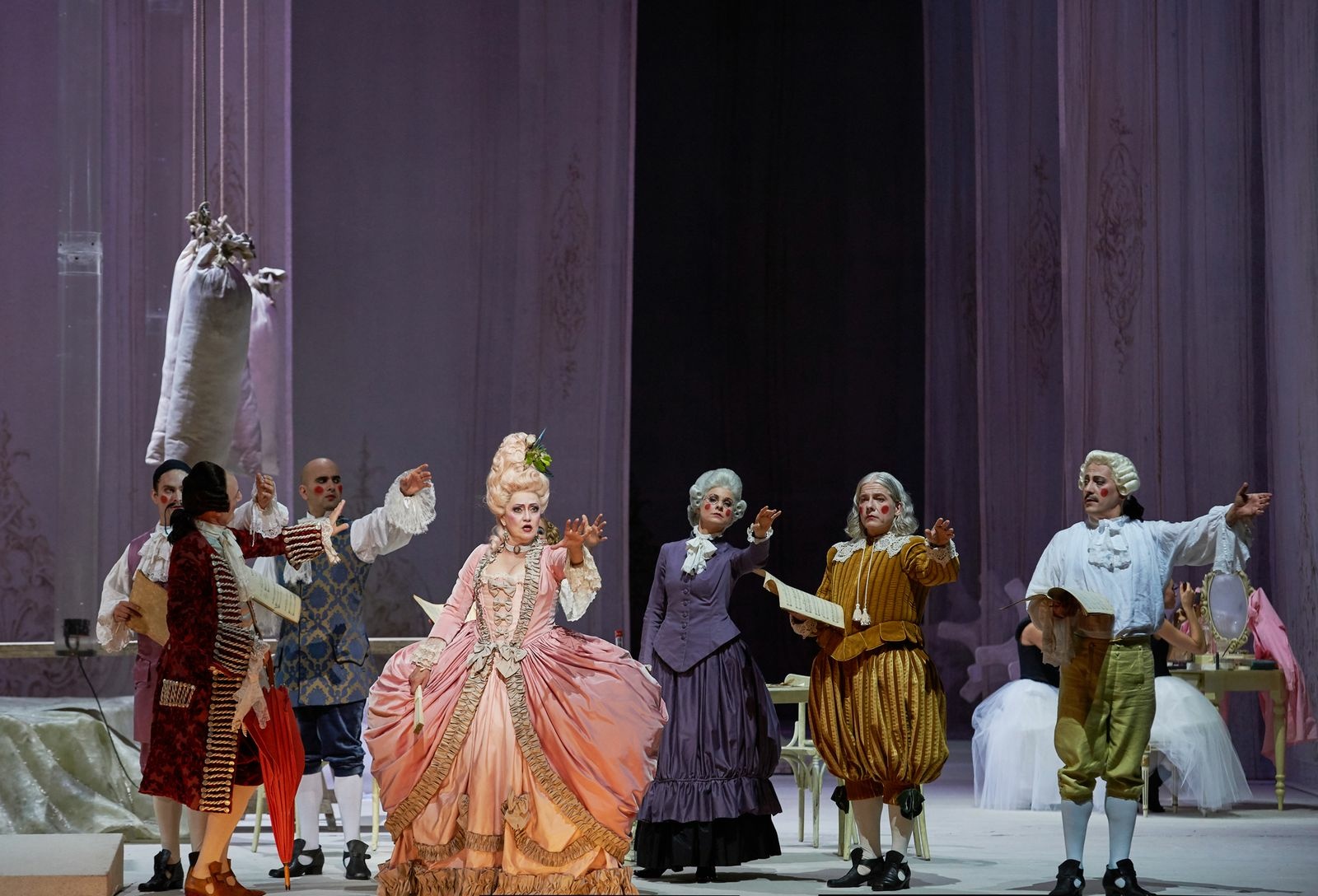
Salvatore Sciarrino is no stranger to the Staatsoper. Five of his music theatre works were performed between 2010 and 2016 in the Schiller Theater. His new work has all the features of his distinctive style: crystal-clear, fragile yet urgent music. In addition, he has produced a highly artificial, nuanced text treatment with references to past chapters of music history, now set in a contemporary context. The subtitle of Ti vedo, ti sento, mi perdo ("To see you, to feel you, to lose me") is Waiting for Stradella. This alludes to the fate of Alessandro Stradella, a highly prominent Italian composer during his time, who died in mysterious circumstances in 1682 – the victim of a violent crime.
The work is set in the home of the aristocratic family Colonna in baroque Rome, where a singer, a writer, a musician, a choir and an instrumental ensemble are on stage awaiting the arrival of the composer.. But instead of the promised new aria, they receive news of Stradella’s death. In the lead-up, the music and life of this controversial, original artist – a legend during his lifetime – are extensively reported and reflected upon. Different perspectives and values play a role, as do thoughts on human nature, the body, the senses and passion – in other words, the very essence of opera as an art form.
Picture © Clärchen Matthias Baus